Tenchusatsu and Marriage: Check Both Partners and Your Registration Date
ezfate's free tenchusatsu marriage date checker turns your birth date, your partner's and a candidate registration or wedding date into whether that day falls in a void year, void month or void day for each of you. A three-week view around the date shows the pattern at a glance, and the next dates clear of void days and months for both are suggested. Years change at the Start of Spring, months at the solar terms. No sign-up.
- Free, no sign-up
- Both partners at once
- Registration and wedding date
- Next clear dates suggested
Updated November 8, 2026
Check a registration or wedding date
If you saved charts, your date (and your partner's) is filled in. The partner's date is optional.
Any date from 2025 to 2029.
Showing the example couple (born May 12, 1990 and Apr 12, 1991). Enter your dates of birth to see your own result.
This date is outside every void year, month and day.
Registration date · Dec 23, 2026 (Wed)
- This yearNot a void year (next: 2028–2029)
- This monthNot a void month
- TodayNot a void day (未 day)
Partner · Tiger–Rabbit Tenchusatsu
- This yearNot a void year (next: 2034–2035)
- This monthNot a void month
- TodayNot a void day (未 day)
Three weeks around the date
One dot per person: red = void day, pale red = void month, green = clear. Tap a day to check it.
Next dates outside void days and void months
What happens if you marry during tenchusatsu?
"Never marry in tenchusatsu" is often repeated, but sanmeigaku's teaching is more nuanced.
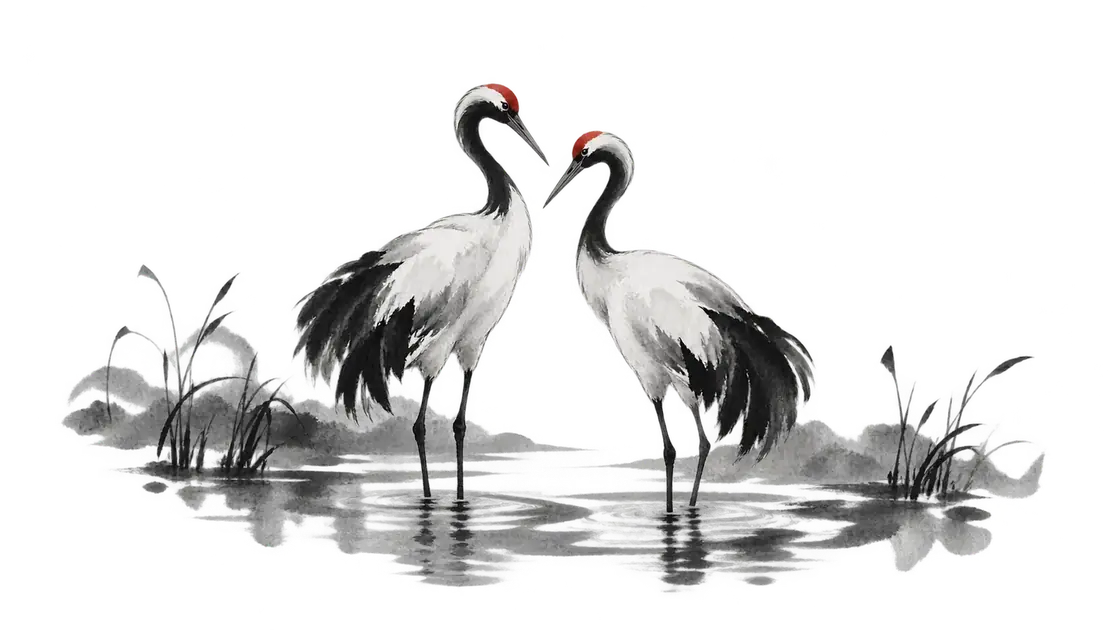
Tradition says a marriage begun in a void year tends to take a less standard shape: living apart for work, a large age gap, an international marriage. The void is a time when the usual frame comes off, so the marriage's frame tends to as well. An unusual shape is not the same as an unhappy one.
Plenty of couples who married in a void are happy. What most teachers recommend is not postponing the marriage but a receptive attitude towards your partner, and keeping dates you can choose, like the registration day, out of the void month and day.
Marriages said to go well even in a void
- A marriage that grew naturally out of care for each other
- One that listens to the partner's and families' views
- One where the couple were already together before the void
- One that chooses a way of living that suits the two of you, whatever the form
Marriages to approach with care
- One decided only out of a rush to be married
- One that tries to bend the partner to your plans
- One pushed through against everyone's objections
- One chosen only for income or status
By phase: marrying the year before, during and after the void
Tradition reads the same void differently depending on the phase.
The year before
Registering before the void
If the registration is done before the void begins, the marriage is said to be little affected; a wedding ceremony inside the void is usually considered fine.
Void years 1 and 2
Registering during the void
If it has to fall inside, the traditional compromise is to avoid the void month and day and to marry with a receptive attitude. Pick a date with the checker above.
After the void
Registering after it ends
From the Start of Spring at the end of year two the void is over. If you can choose, registering after it is the most reassuring option.
Void months and days
A void month or day
The two void months each year and two void days in twelve weigh far less than a void year. Many people simply keep a registration day off them.
Registration, wedding, proposal, engagement or moving in: which date counts?
The registration date counts most
Sanmeigaku usually takes the legal registration of the marriage as its start, and most teachers weigh it above the ceremony or the start of life together.
If the registration and the wedding are far apart, check both dates with the checker above.
The wedding ceremony
If the registration came before the void, a ceremony inside it is usually not a concern. If you can choose the ceremony date, keeping it off void months and days is reassuring.
Proposal and engagement
A proposal or engagement during a void need not be refused. What comes about naturally is fine; some couples simply put the registration after the void or outside its months and days.
Moving in together
Moving in before marriage is both a move and the start of a shared life. The moving side is covered on tenchusatsu and moving house.
When only one of you is in tenchusatsu, both of you, or you share a type
Only one of you is void
Tenchusatsu is personal, so often only one partner is in it. Tradition says it goes best when the partner in the void defers and the other leads. Enter both dates above to see who is void when.
Both of you are void
Your void years coincide exactly only if you share a type. Neighbouring types (Dragon–Snake and Horse–Goat, for example) have back-to-back void years, so one of you is void four years running. Don't rush, and keep dates you can choose off void months and days.
A couple of the same type
Partners of the same type meet their void years and months at the same time. They are said to understand each other easily, and to do best by keeping big joint decisions modest during those years. Compatibility between the six types is on each type page.
Marriage during a luck-pillar void, or with a natal void
A luck-pillar void lasts about twenty years, so it often overlaps the marrying years. Avoiding all of it is not realistic; the usual view is that avoiding the void year and month is enough. Find yours with the luck pillar tenchusatsu calculator.
People with a natal void, such as a year- or month-pillar void, are read as suiting a marriage that does not follow the usual template, and two people with natal voids are said to get on well. Check with the natal tenchusatsu calculator.
Love during tenchusatsu: meeting, dating, confessing, breaking up
Compare two whole charts with Bazi marriage compatibility or Bazi love compatibility.
- Meeting: people met during a void are sometimes said to be a weak match, but a relationship that carries on naturally after the void is nothing to worry about.
- Dating and confessing: following the other person's pace is said to work better than pushing hard.
- Break-ups and getting back together: the void is said to sort relationships; some couples reconnect once it ends.
- Age gaps and international love: with the frame loosened, you may be drawn to someone you would not usually choose.
Pregnancy and birth during tenchusatsu: children born in a parent's void
Sanmeigaku has the idea of a "heaven's-void child" (天中子), born during a parent's void, said to grow up less according to the parents' plans and to go their own way early. It does not mean an unhappy child; the advice is to respect the child's individuality.
Pregnancy and birth cannot be scheduled at will, and there is no reason to worry about them because of tenchusatsu. Make medical and family-planning decisions with your doctor and partner. A child's own chart is in the Bazi calculator.
If you already married during tenchusatsu
Marrying in a void does not decide divorce or unhappiness. Tradition only reads the marriage as taking an unusual shape and running well when partners defer to each other.
If it bothers you, mark a new start together after the void ends: a ceremony, a honeymoon, a family photo. What matters more than the date is whether you can care for each other.
Tenchusatsu and marriage: FAQ
Beyond the void years
Read your timing against the whole chart
A void year is one timing marker among many. Chapter 6 of your Bazi reading, “Luck cycles and the years ahead”, reads your luck pillars and coming years from the whole chart, including what the void years mean for you. Chapter 1 is free with an account.
- 1Your chart at a glanceFree
- 2Personality
- 3Career and money
- 4Love and relationships
- 5Five elements and balance
- 6Luck cycles and the years aheadTiming
All tenchusatsu pages
- 空Tenchusatsu calculator
- 運Luck-pillar tenchusatsu calculator
- 宿Natal tenchusatsu calculator
- 午Tenchusatsu 2026
- 未Tenchusatsu 2027
- 過How to spend tenchusatsu
- 婚Tenchusatsu and marriage
- 移Tenchusatsu and moving house
- 職Tenchusatsu and changing jobs
- 違Tenchusatsu vs daisakkai and yakudoshi
The six types
More free tools
- Tenchusatsu calculatorYour void type and the exact years, months and days it returns.
- Bazi CalculatorFour Pillars, ten gods, hidden stems, element balance and luck pillars. Free, and no sign-up.
- Luck pillar start ageWhen your ten-year luck pillars begin, and how to calculate it.
- The ten Day MastersThe stem of your birth day: who you are in the chart.
- Bazi CompatibilityCompare two charts for love or business.
- Chinese Zodiac 2026The year ahead for all 12 animals: love, career, money and health.